Tagaste ArchivalOngoing research program

Kept for a
thousand years.

The Church measures its life in centuries. Its daily life disappears in days.

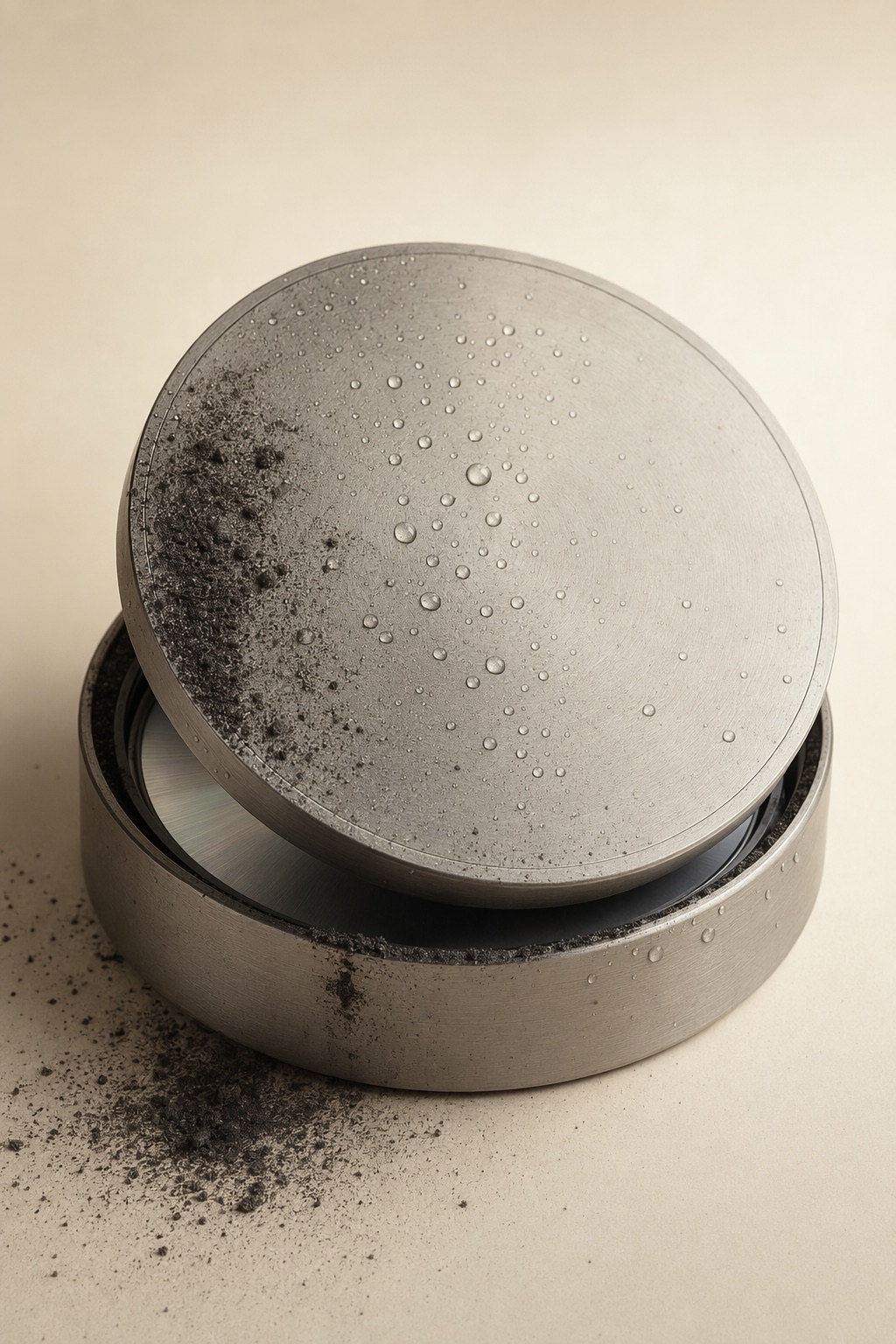
An open metal archival case, dusted with ash and beaded with rain, holding a disc

We are building the record of the living Church, and keeping it on media chosen to outlast us.

The capture runs daily. This is the program.

Archival programHomily / Bulletin / Stories / Parish life
1026

The Church was already a thousand years old. What survives from her parishes that year fills a few shelves.

2026

We record the living Church as it happens: the preaching, the bulletins, the gathered hours of hundreds of thousands of parishes.

3026

The open question this program exists to answer: what form of the record is still readable here, and who is keeping it.

What is evaporating

Three records. All disappearing.

In 1922, one fire at Dublin's Public Record Office took seven centuries of Irish records — including generations of parish registers — in an afternoon. Paper in one building is not a plan.

01

The homily

Preached once, to one room. Parishes are advised to delete recorded Masses within days, partly to stay clear of music licensing on the hymns. The preaching goes down with them. The largest corpus of Catholic preaching in history is being erased on a schedule, for reasons that have nothing to do with the preaching.

02

The bulletin

Diocesan retention schedules mark parish bulletins for permanent keeping. In practice that means paper, in one filing cabinet, in one building. History shows how that ends.

03

The parish's own memory

When a parish closes, its sacramental registers are saved. The photo albums, the founding records, the ministries, the stories of its people — the texture of its life — die in a rectory closet.

The precedent

One church already built for eternity.

In the Wasatch Range outside Salt Lake City, behind multi-ton blast doors and seven hundred feet of granite, the Latter-day Saints keep more than three billion record images. They began microfilming in 1938, before almost anyone. Today their cameras photograph over a million record pages a day in archives around the world.

They built all of it because their theology told them records carry eternal stakes. That is the lesson we take from the mountain: where a church believes memory is sacred, it builds for permanence, and no one else will build it for her.

The gap

The Church keeps her treasures.
No one keeps her Tuesdays.

At the deep past, the Catholic Church is patient and world-class: eighty-five kilometers of shelving in the Vatican Apostolic Archive, manuscripts digitized to standards built to outlast software. Dioceses guard the sacramental registers. Genealogy projects publish the records of the dead.

The living parish is another matter. No institution — not the Vatican, not the dioceses, not the genealogy companies — systematically preserves the homily as preached, the bulletin as printed, parish life as lived.

The most devoted homily archive we could find anywhere was a teenager's scout project: twelve hundred homilies, one parish, saved by hand.

She understood something her Church's institutions have not yet acted on.

A century from now, historians will know the Church's decrees. Whether they know what a Tuesday sounded like depends on what gets kept in this decade.

Where the program stands

The capture is running. The method is proven.

Through Catholic Index, homilies, bulletins, schedules, parish imagery, and the recorded faith stories of ordinary Catholics are captured daily and held on redundant modern infrastructure. The right first home. Not the last one.

Permanence was not designed on a whiteboard. It was worked out on a record the founder could not afford to lose: his own family’s. Photographs, messages, film, pulled out of the platforms holding them, verified, and fixed to media built to outlast the archivist. That practice is the method. It scales in four steps.

01

Liberate the originals

Records live inside platforms that were never built to keep them: streaming accounts, publishing portals, cloud silos. The first step is getting the original files out, at full fidelity, with their dates, sources, and provenance intact.

02

Normalize and verify

Open formats chosen to outlive their software, provenance embedded in the files themselves, every copy checked against its source. The Vatican Library stores its manuscript scans in the file format NASA built for astronomy, for exactly this reason. We hold our record to the same discipline.

03

Multiply the copies

The first law of the preservation field: lots of copies keep stuff safe. Independent copies, on independent media, in independent places. No single building, account, or company should be able to lose the record.

04

Fix the masters

Written once, to media that physically cannot be rewritten. What cannot be rewritten cannot be quietly lost.

The objection

Is the cloud not enough?

It forgets

Cloud storage is a lease. A lapsed card, a closed account, a discontinued product, and the record is gone. Nobody’s grandchildren will keep paying the bill.

It resists leaving

Extracting one family’s archive from the platforms holding it took quota workarounds and third-party tools. A record you cannot walk away with was never yours.

It rewrites silently

Sync clients recompress, optimize, and dedupe. An archive whose bytes can change without anyone deciding is not an archive.

The cloud is the right working home for a growing record: fast, redundant, indexed. It is the wrong final one. That is why the method ends the way it does.

The medium

We chose the disc.

Hard drives die in years. Ordinary discs record onto organic dye that fades within a decade. M-DISC etches data into an inorganic, stone-like layer. When the U.S. military ran archival discs through accelerated aging, heat, humidity, and full-spectrum light, every disc failed except this one.

No single medium is a plan, which is why it anchors the method rather than replacing it. But when the record matters for centuries, you start from the medium with nothing in it that fades.

MediumM-DISC archival optical
Recording layerInorganic, stone-like. No dye to fade
Rated life1,000 years by design. A century-plus by independent testing
Torture testSole survivor of the U.S. military's accelerated-aging trial
RewritableNo. By design
Sole copyNever. Copies on independent media, in independent places

Still open

The method runs today. The research is running it at the scale of the whole Church, and deciding under whose roof.

i

The scale

A family's memory fits in a drawer of discs. The Church's record grows daily. Running a millennium write at that scale is the active engineering research.

ii

Whose custody

A company is not a thousand-year institution. The Church is. Where should the permanent copies live: a diocese, a university library, a religious order, Rome? We would like help answering this.

iii

What governance

An archive of the living Church should outlast its builders. What agreements, access rules, and stewardship make that true. We are studying how others solved it.

The service

Archive your parish.

This is not only a research program. It is a working service. We collect what your parish has — photographs, founding records, bulletins, homilies, parish materials, the stories of your people — digitize it, verify it, and fix it to media rated for centuries. Your parish keeps its copies.

Tell us who you are, and we will talk through what you have and what it would take to keep it.

The next step

This is bigger than one company.

If you are an archivist, a digital-preservation engineer, a historian, a librarian, or simply someone this problem pulls at, we want to hear from you.

[email protected]